At Basement Roma, Dorota Gawęda and Eglė Kulbokaitė turn likeness into a wound, the mirror into a camera, and visibility into something a body has to survive
The Foot Comes First
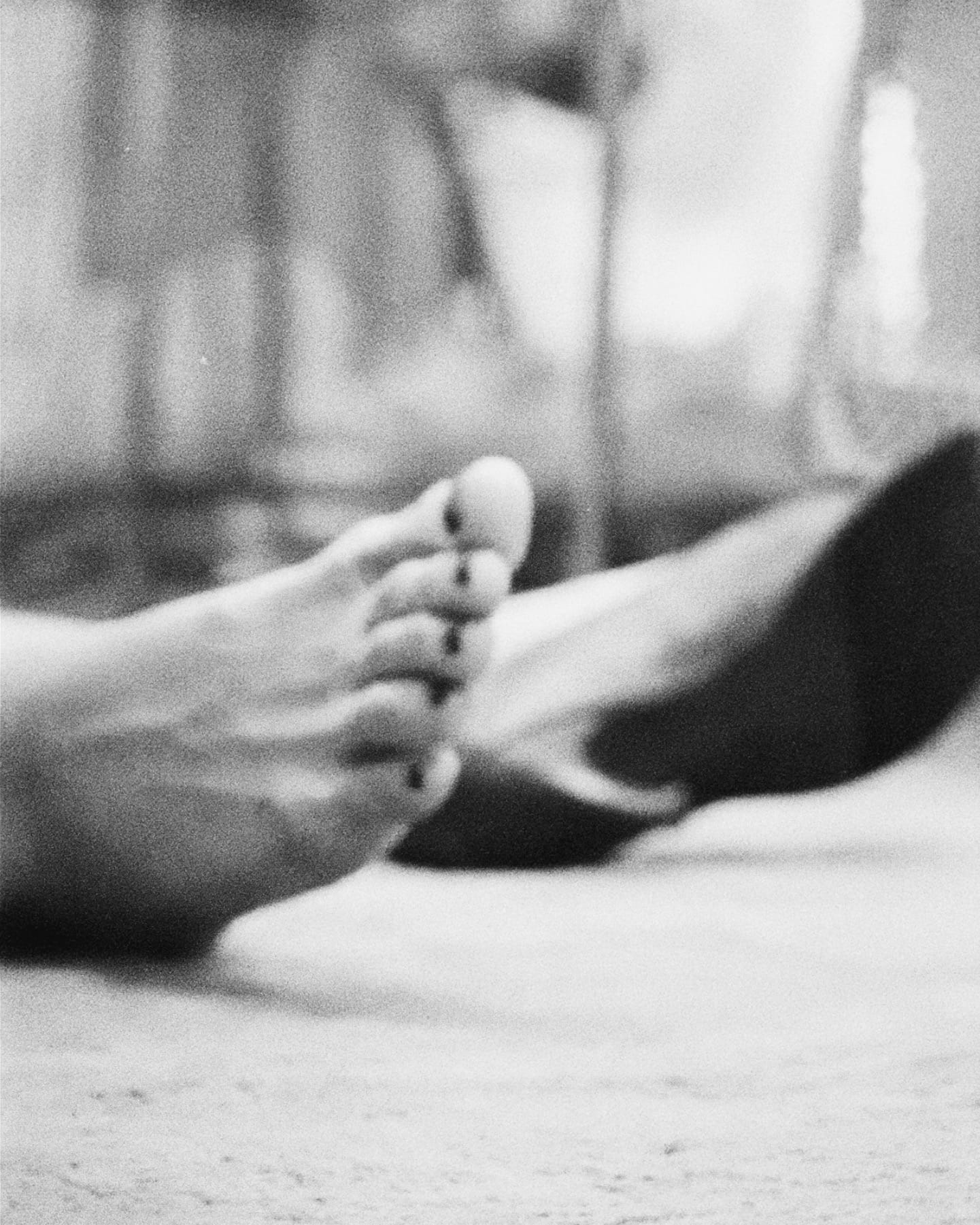
Before I understood the exhibition, I felt one image first: a foot near the edge of the frame, pale, blurred, almost surrendered to the room.
I did not yet know what I was looking at. I knew only that looking had already started inside me. The surrounding space had lost its edges. Glass, mist, skin, reflection, phone, instrument, mouth: everything seemed to have passed through water or fever. Some exhibitions wait for thought. This one touched the nervous system first.
Criticism likes to enter with its tools already clean: context, biography, medium, genealogy, theory. But some works do not first offer themselves as objects of knowledge. They enter through the body. They change the pressure of the room. They make the visitor aware of breath, skin, posture, the shame of looking too closely and the equal shame of looking away too soon.
Dorota Gawęda and Eglė Kulbokaitė’s Spit and Image, at Basement in Rome, belongs to that kind of encounter. It does not ask to be decoded immediately. It asks for a different time. It asks to be stayed with.
The facts should be placed on the table, but not allowed to flatten the room. On view from April 28 to July 10, 2026, such remarkable performance marks the duo’s first solo exhibition in Rome. It is curated by CURA, produced by Basement Roma, with exhibition text by Yang Beichen. Gawęda and Kulbokaitė work collaboratively across painting, sculpture, performance, and installation; here, video, scent, mist, mirrors, and sound extend that practice into a chamber of perception. Their work moves through the porous borders between body, technology, environment, code, gesture, visibility, invisibility, and the spectral.
But even that description cannot fully account for the intimacy of the visit: the feeling of entering a place where the body seems broken into signals, mirrors, wounds, breath, and fog, then reassembled into something not exactly human and not exactly inhuman either.
The title, begins with the old phrase of resemblance. A child is the spit and image of a parent. A face returns in another face. The past finds its copy. But here likeness is not comfort. It is not family resemblance made tender. It is contamination. The double does not reassure us that identity continues. It suggests that identity was never single to begin with.
That could sound abstract until one stands before the work
Then it becomes literal
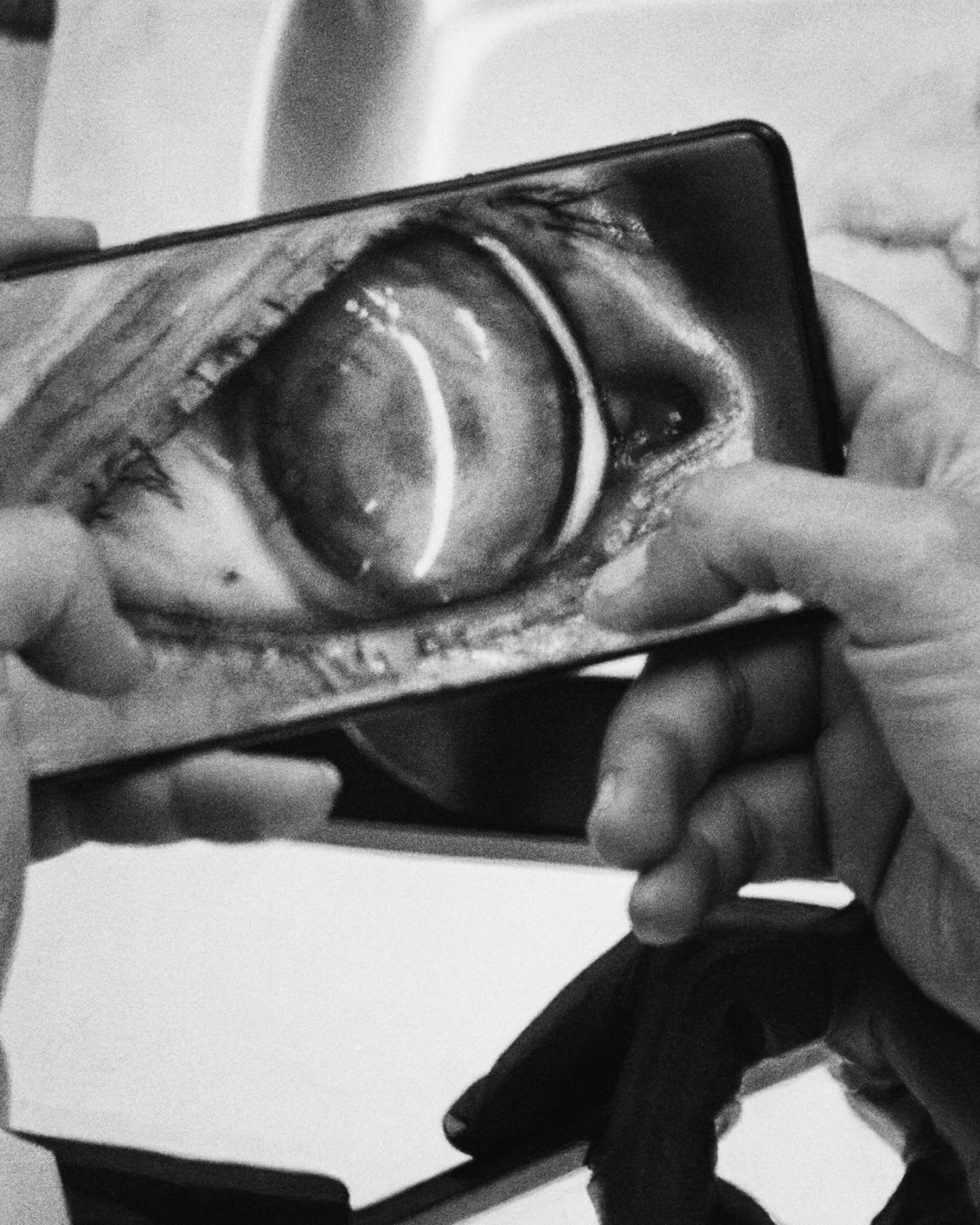
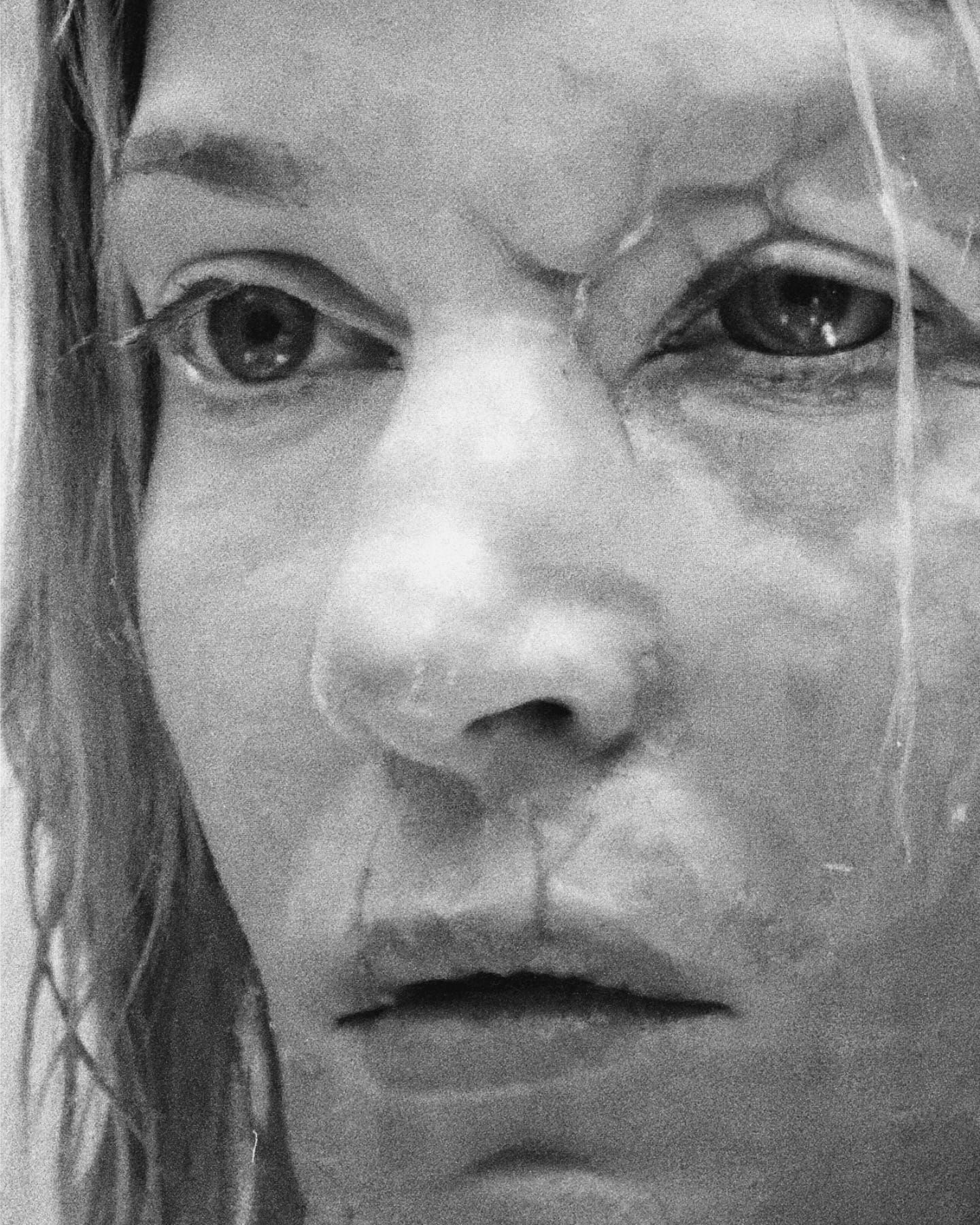
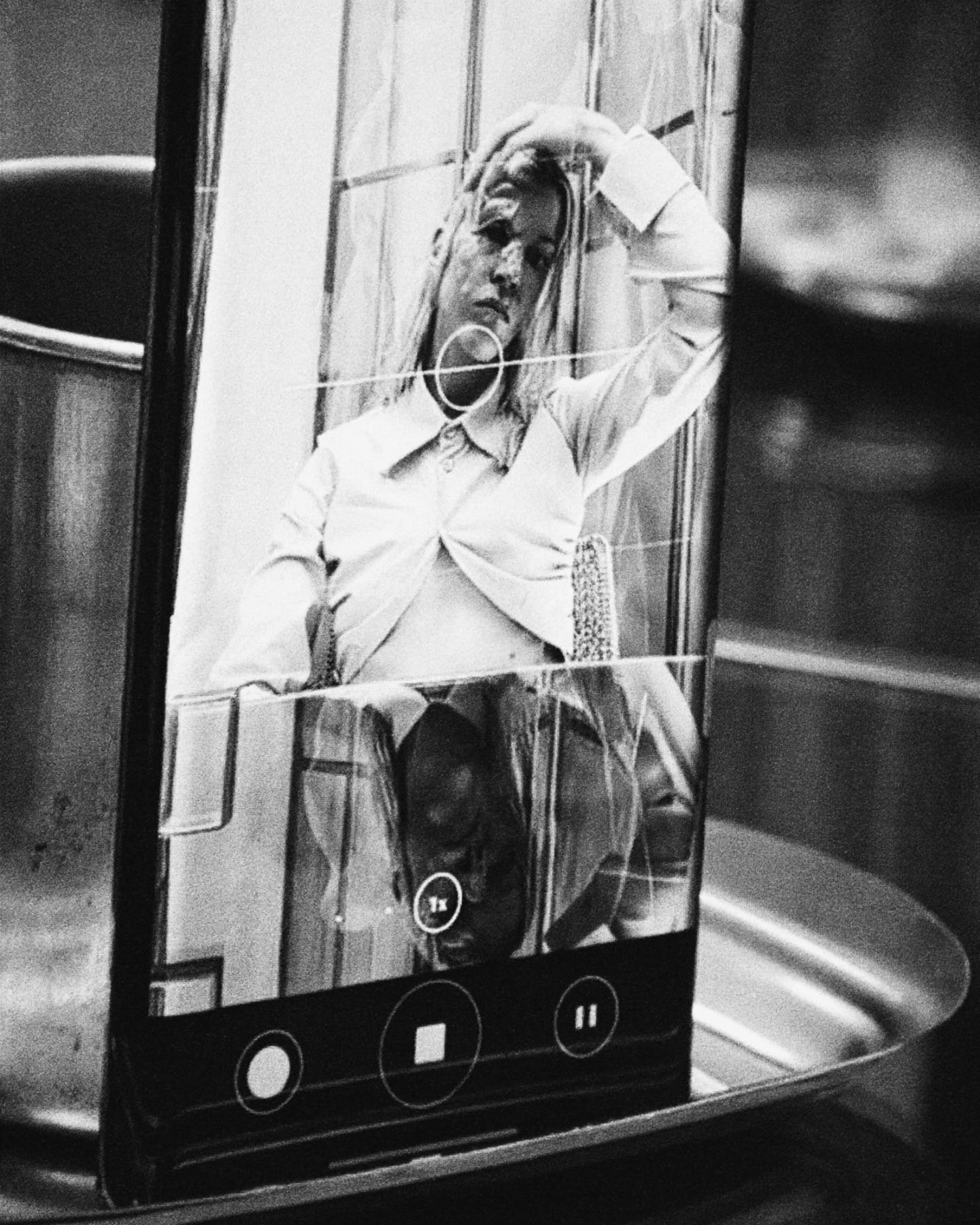
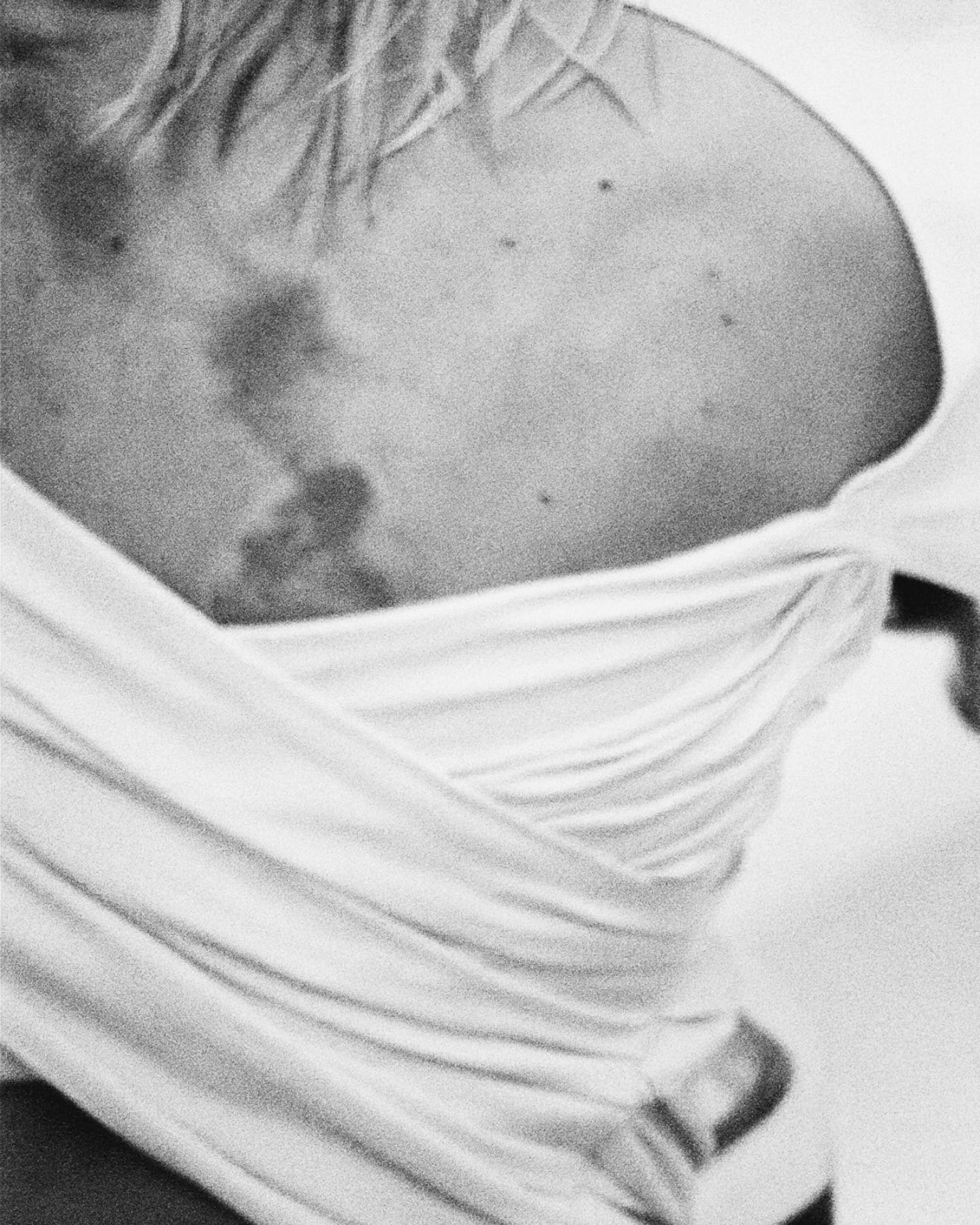
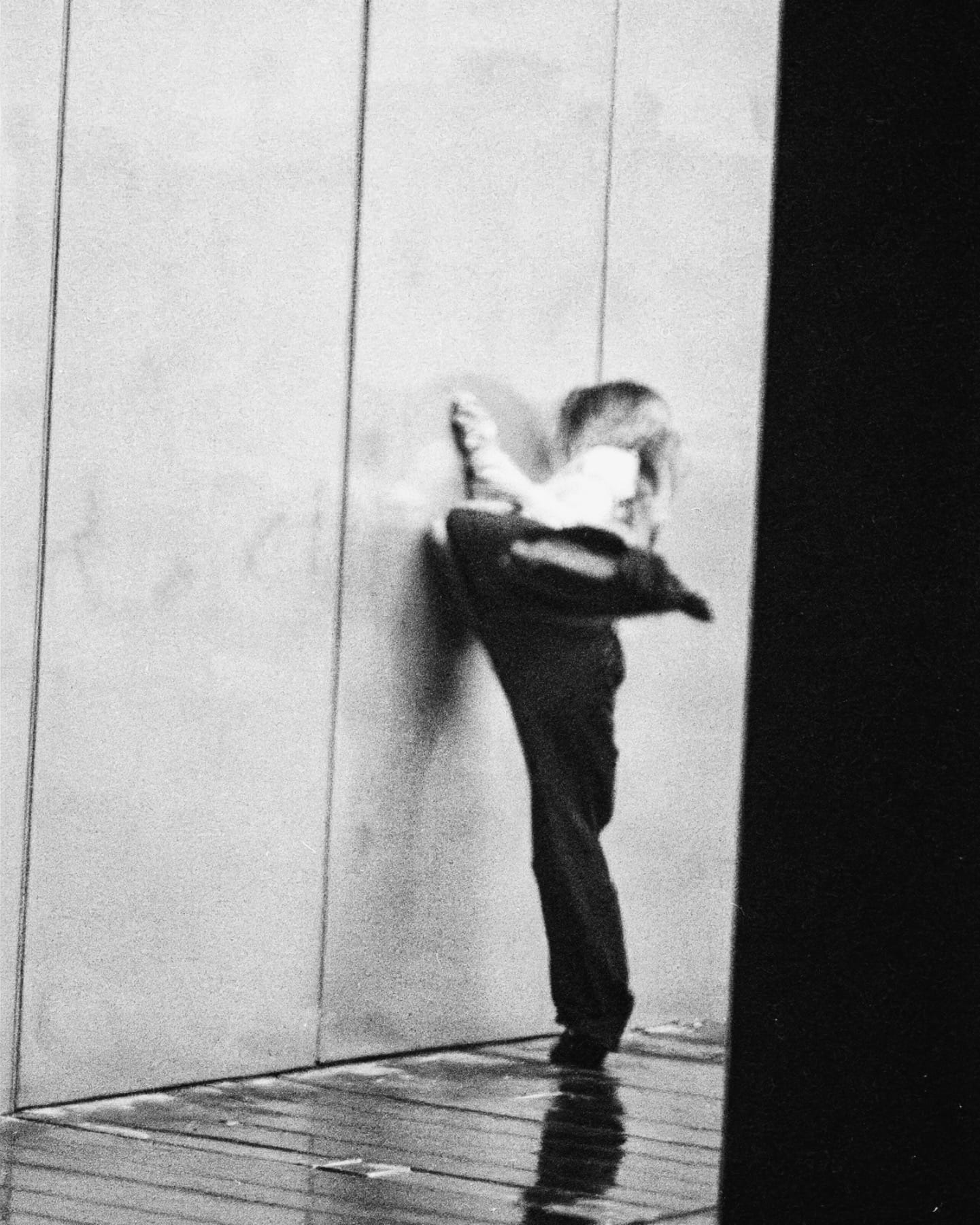
In the photographs I took, the exhibition has the grain of fever. The foot returns, blurred in the foreground, almost tender, almost corpse like, while the room dissolves behind it. A body appears behind glass, split and multiplied by reflection. Skin carries marks that might be rash, injury, memory, or apparition. A phone screen holds an eye inside another image, turning the act of seeing into something surgical. Another phone records a performer whose body already seems divided between presence and transmission. A foot, or something like a foot, is approached by instruments; the scene feels medical, ritualistic, and sacrificial at once.
Finally, a face fills the frame: tired, pale, direct, almost too close. Not a portrait exactly. More like the visible world making an accusation.
This is where the exhibition became, for me, not only a work about identity but a work about what I keep trying to call Visual Humanism.
Visual Humanism is not the polite representation of people. That would be too easy, and often too sentimental. It is a discipline of looking. It asks how an image can stay close to a body without taking too much. It asks how suffering can be made visible without being turned into spectacle. It asks how a camera, a mirror, a screen, or an installation can preserve the dignity of uncertainty.
In this performance, the body is not a case file. It is not a symptom arranged for our interpretation. It is a working intelligence moving through wound, reflection, technology, folklore, and air.
This matters because Gawęda and Kulbokaitė are not making body horror in the simple genre sense. They are making a horror of classification. The frightening thing is not that the body becomes monstrous. The frightening thing is that the systems around the body, medicine, beauty, technology, surveillance, gender, capital, image culture; have already made the body strange to itself.
Every age invents a polite language for managing bodies
Ours calls it visibility
Often, it means extraction
Against One Soul
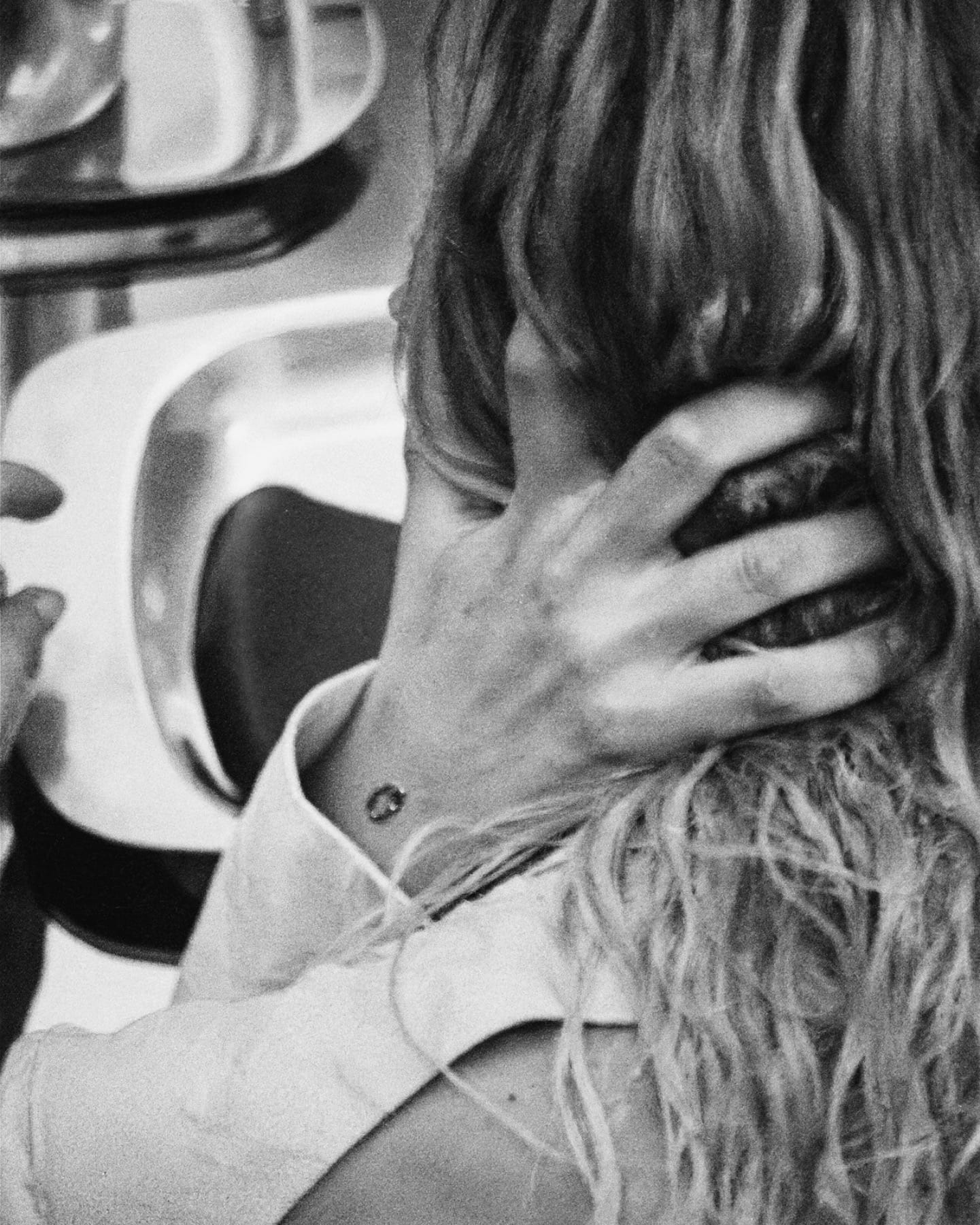
The show’s central mythic figure is the upiór, a Slavic vampire with dual souls, suspended between life and death, human and non-human. The figure carries the whisper of the marginalized and the nameless. It is not folklore placed inside a contemporary exhibition for atmosphere. It is the pressure point of the whole work.
The upiór allows the artists to imagine a figure that cannot be contained by the categories that usually discipline a body: alive or dead, human or monster, subject or object, original or copy, body or image, wound or symbol.
The upiór is powerful because it refuses the violence of one soul.
Modern life is very invested in one-soul thinking. One identity. One profile. One body. One data subject. One medical record. One image. One name. One measurable life. But the upiór stands against that administrative fantasy. It says that a person may be inhabited by incompatible forces. It says that disorder may sometimes be a more accurate truth. It says that the body is not a sealed container.
It is a haunted passage
This is why my first private association went to Halldór Laxness and Independent People. I thought of Gunnvör, the witch like figure, the stones, the curse, the way violence enters land and stays there. I did not feel that the exhibition was illustrating Laxness. It was something less direct and more useful: a kinship of weather.
Gunnvör and the upiór belong to different mythologies, but both occupy the dangerous territory where suffering becomes too large for ordinary human form. A person becomes curse, vampire, witch, ghost, double, rumor, landscape. That transformation is frightening, but it can also be a form of justice. When a society cannot understand pain, myth may be the only scale large enough to hold it.
That, to me, is the emotional key of the exhibition: suffering does not disappear because it is misrecognized.
It changes state
It becomes mist
It becomes scent
It becomes reflection
It becomes rash
It becomes a second face in the mirror
It becomes a body on a phone screen
It becomes a mouth that cannot speak without also being watched
The words that stayed with me and myself around the work had this same broken force: “Incompatibility is itself a source of pleasures.” “Still practicing arrhythmia.” “A rash.” “No one, split open.” “Sleep with your mouth full.” “Wrapped in plastic.”
They do not behave like explanations. They behave like residues. A glove left after the hand has gone. A sentence heard through a wall. A fragment recovered from ritual after meaning has already passed into the room.
“Incompatibility is itself a source of pleasures” is a dangerous sentence because it refuses the moral comfort of clarity. I understand the wish for clarity. It feels responsible. It feels clean. It can also become another demand made on the wounded body.
We like to think communication is always good, that expression is always healing, that every trauma should become legible, that every image should eventually yield its statement. But the exhibition suggests something less comfortable. Some experiences do not become less true because they remain partly uncommunicated and incompatible. Opacity can be a form of survival. The body may protect itself by failing to become fully readable.
That is where the exhibition moved outside the mainstream for me. It is not anti-stereotypical by slogan. It is anti stereotypical by form. It does not present womanhood as a coherent message. It does not turn suffering into a clean political emblem. It lets the viewer think of abortion, self-image, shame, medical exposure, beauty, injury, desire, and fear without reducing the work to any one of those themes.
The exhibition does not say: this is what a woman suffers.
It says something more disturbing: look how many systems want access to suffering, and look how little they understand once they get there
The Flower That Watches
The mirrors are central to this.
In Yield (twinning), the stainless steel floral mirrors draw from a cosmetic mirror design once common in the former Eastern Bloc: a round mirror set inside plastic petals. That origin matters. A make-up mirror is intimate. It belongs to preparation, correction, femininity, private ritual, the small daily discipline of arranging a face. A surveillance camera belongs to suspicion, evidence, control.
Gawęda and Kulbokaitė fuse the two.
The result is brutal in a quiet way: a flower that watches you while pretending to beautify you.
Every person who has spent time in front of a mirror knows that mirrors do not simply return the self. They train the self. They ask for adjustment. They make the body into a task.
Fix this
Hide this
Improve this
Compare this
Remember this
But here, the mirror becomes stranger and more honest. It does not give the viewer mastery. It gives the viewer participation in a system of looking already contaminated by technology, nostalgia, gender, and control.
The phone screens in my photographs extend that logic. The phone is the mirror we carry. It is also the witness we trust too much. To see a face or body through a phone inside an exhibition is to see looking become layered: the performer is seen by the camera, the camera is seen by us, we are reflected in the space, and somewhere inside that chain the original body recedes.
The image becomes proof of presence and theft of presence at the same time.
This is why the work feels current without flashing the usual signs of the present. Its technology is not flashy. It is atmospheric. It understands that the most powerful technologies are not always the newest machines. They are the habits of perception those machines install inside us.
The phone teaches us to archive before we feel
The mirror teaches us to judge before we inhabit
The screen teaches us that nearness can happen without touch
The exhibition slows those habits down until they become uncanny
And then there is the mist
Mist works here because it is visible and evasive at once. It gives the eye something to hold while refusing outline. It makes space feel bodily. It also changes the ethics of looking. The viewer cannot possess what the viewer cannot sharply see.
Scent works even more radically. A visual culture obsessed with images is interrupted by smell. Smell cannot be kept at a polite distance. You cannot look at scent without being touched by it. It enters the body through breathing. It crosses the border between artwork and viewer without asking for the permissions an image asks for.
It makes spectatorship bodily again
The gesture is simple and severe. It returns the viewer to vulnerability. Not dramatically. Physically.
You breathe, and the work has already entered
This is where the exhibition’s humanism refuses purity. It does not return us to a pure human body before technology. There is no such body here. The body is already technological, ecological, ancestral, digital, chemical, mirrored, filmed, scented, remembered.
To be human is not to be untouched
To be human is to be permeable and still somehow responsible
Gawęda and Kulbokaitė’s earlier work has long been building this grammar. Their Young Girl Reading Group treated reading not as a private intellectual act but as something embodied, technological, shared, and performed. The reader is no longer only the person with a text. The reader is skin. Breath. Fear. The body begins reading before the mind knows what the text is.
What do we read first?
Maybe the foot
Care, Harm, and the Foot
A foot is almost always more vulnerable than a face. A face has learned performance. A foot has less defense.
In one photograph, the foot is blurred, pale, extended, almost abandoned to the room. In another, a foot-like form is approached by instruments, somewhere between surgery and ritual. The image unsettles because it is hard to decide whether care or harm is taking place.
That uncertainty matters. Many institutions that touch bodies, medicine, law, beauty, family, religion, technology ,speak in the language of care while also exercising control. A body may be examined for its own good and still feel invaded. A body may be saved and still feel handled. A body may be watched and still not be seen.
This is why the show can lead my mind toward abortion without becoming an illustration of abortion. I say this carefully, because the work does not need to be reduced to that. But abortion is one of the places where a body marked female becomes most violently contested as image, argument, evidence, morality, law, and private terror. It is a bodily experience that public language repeatedly tries to own.
The exhibition opens the chamber where such thoughts live: exposed skin, marks, mouth, clinical coldness, double, mirror, phone, the ritual of being looked at by systems that may not love you.
The work does not ask the viewer to pity the body.
It asks the viewer to examine the conditions that make pity inadequate.
That distinction is everything.
Too much art about suffering is satisfied with producing emotion. It makes the viewer feel moved and then mistakes that feeling for ethics. This art is stronger than that. It does not let emotion settle into virtue. It keeps the viewer unstable. It makes one wonder whether one is witnessing harm, healing, performance, memory, myth, or all of them at once.
It refuses the comfortable sequence: wound, explanation, empathy, resolution.
Instead, it gives us wound, mirror, fog, double, scent, mouth, glitch, return.
In this sense, the exhibition also touches what I have called inherited weather: the emotional climate passed between generations, families, institutions, and societies before it becomes language. Here inherited weather becomes inherited visibility. The body inherits ways of being seen before it can choose how to appear.
A woman, or a body read as one, inherits mirrors. She inherits warnings. She inherits myths about impurity and beauty. She inherits medical rooms, family silences, ancestral fears, digital self performance. She inherits the task of becoming an image and the punishment for becoming the wrong one.
The upiór returns because modernity did not abolish the vampire.
It changed the appetite.
Today the vampire may be the algorithm that feeds on attention. It may be the archive that demands more images. It may be capital extracting identity from self expression. It may be the institution that aestheticizes marginality. It may be the viewer who wants pain to become meaningful quickly enough to post about it.
The exhibition knows this. It does not place the monster outside us. It makes monstrosity a relation.
If the show imagines a monstrous body rising against an uncanny reality, I believe it. But the monstrous body is not the opposite of the human. It may be the human after the human has stopped pretending to be whole.
This is where the work becomes cathartic, but not in the easy sense. It does not purify suffering. It gives suffering a form large enough to move through. Catharsis here is not release. It is metamorphosis.
The body does not become healed. It becomes multiple. It becomes double, fog, fragrance, reflection, voice, screen, myth.
It escapes the one image that would have trapped it.
Maybe this is why the exhibition felt, immediately, like mythological territory. The mythic is not the opposite of the real. Sometimes myth is what reality becomes when ordinary description fails. The woman who has suffered too much becomes witch. The dead who have not been mourned become vampires. The body that cannot speak becomes scent. The face that cannot be held becomes mirror. The wound that cannot be explained becomes image
Beneath Rome
Basement Roma matters here.
A basement is never neutral: below street level, beneath ordinary circulation, near storage, pipes, dampness, foundation, things not meant for display. In the Rome of offices, apartments, scooters, errands, glass doors, and old façades, the descent matters. Rome above ground is trained in monument and surface. It knows how to present itself.
Stone, church, façade, traffic, terrace, ruin, scooter, beer, cigarette outside a doorway, someone checking messages under old walls.
The city has a genius for making history visible and a talent for hiding the living body inside that visibility.
To enter Basement Roma is to descend under that civic performance. Not escape it. Go beneath it.
That is important. In a city that has taught the world to admire the classical body, proportioned, named, carved, lit, preserved, this exhibition offers another body: porous, injured, mirrored, unstable, scented, ungovernable.
Not the body as ideal
The body as weather system
The body as evidence that refuses the court
It is tempting to say that all of this is about the future, because it speaks so fluently to algorithms, screens, virtuality, and technological identity. But the deeper achievement is that it refuses the separation between future and past. The future here is full of witches. The past is full of machines. The vampire has learned to live inside the camera. The mirror has become a surveillance device. The scent has become an archive. The body has become both medieval and post digital.
This is not nostalgia. Nostalgia wants the past harmless. Ancestrality does something harder. It lets the past return as unfinished business. It does not ask, “Was it better before?” It asks, “What was buried so modernity could call itself progress?”
In that sense, Spit and Image is not simply a contemporary art exhibition. It is a séance for forms of knowledge made illegitimate: witchcraft, smell, bodily intuition, collective reading, horror, female pain, ghost stories, folk ritual, non-human relation, the intelligence of not being fully understood.
At this point, criticism has to choose. It can explain the work until it becomes smaller, or it can stay near the pressure the work creates. I trust the second task more.
Something happens here to the ethics of seeing. The image of the woman as beauty, evidence, object, and threat shifts; the body stops behaving like a stable subject and becomes a haunted network.
Something happens to the viewer, too, who enters wanting to look and leaves implicated in looking.
The show’s achievement is that it makes uncertainty feel exact.
Not vague
Not decorative
Exact.
The exact uncertainty of a face seen through glass
The exact uncertainty of a bruise that may be paint, wound, rash, or omen
The exact uncertainty of a mouth that cannot decide whether it is speaking, eating, breathing, or being silenced
The exact uncertainty of a mirror that reflects and watches
The exact uncertainty of scent entering the body while the mind still pretends to stand apart
And somewhere inside all this, there is also tenderness
Not soft tenderness. Not sentimental tenderness. A harder tenderness. The tenderness of allowing the body to remain unresolved. The tenderness of not asking the suffering figure to become inspirational. The tenderness of admitting that monstrosity may be a form of protection. The tenderness of letting the figure become too large for the categories that harmed her.
At the opening, even the human organization around the event matters. Every exhibition has visible authors and invisible caretakers: people arranging doors, timings, drinks, messages, introductions, atmosphere. You feel them most when everything seems effortless. Small details like synchronized swimming. Grace under breath control. It is a smile above water and labor below it. It is choreography made from lungs. Moving with the invisible weather while the evening looks effortless.
That image belongs here because Spit and Image is also about breath.
Scent requires breath. Mist reveals breath. Fear changes breath. Performance measures breath. The mouth becomes a threshold: full, silent, open, watched. To breathe in this exhibition is to participate. One cannot remain purely outside it
What the Ghost Holds
Attachment to an exhibition is never clean. You do not love it because it comforts you. Sometimes you love it because it disturbs the right place. Because it touches something you had not yet arranged into thought. Because it leaves you with an image that behaves like a small wound: not dramatic, not open, but present.
The foot
The mirror
The phone
The rash
The mouth
The face too close to be only seen
By the end, I did not feel that I had understood the work in the clean way one understands an argument. I felt that I had been made less certain in a necessary way. The exhibition left me thinking about the female body, yes, but also about the cruelty of demanding that any body be singular.
It left me thinking about the witch not as evil but as social memory in exile. It left me thinking about Gunnvör’s cairn in Laxness, stones, fear, suffering turned into landscape. It left me thinking about the upiór’s two souls, and whether one soul is ever enough for a person forced to survive inside so many systems of capture.
A lesser exhibition might have used folklore as atmosphere
This one uses folklore as counter technology
A lesser exhibition might have used mirrors as visual effect
This one uses mirrors as accusation
A lesser exhibition might have made the wounded body into content
This one lets the body become a method of thought
That is why all have lingered with me
It is not beautiful because it is pleasant. It is beautiful because it gives form to the part of experience that ordinary visibility betrays. It understands that the image is never innocent, that the body is never merely biological, that suffering is never only private, and that myth may be what returns when official language fails the human being.
In the fog of Basement Roma, among mirrors, screens, mouths, wounds, scents, and doubles, Gawęda and Kulbokaitė create a work that does not ask us to believe in ghosts.
It asks whether the ghost was only the name we gave to what we refused to see